
Self-abandonment – where ancestral and generational trauma converge
- 12 July 2026
- Posted by: Michael H Hallett
- Category: Ancestral trauma , Cornerstones , Generational trauma ,
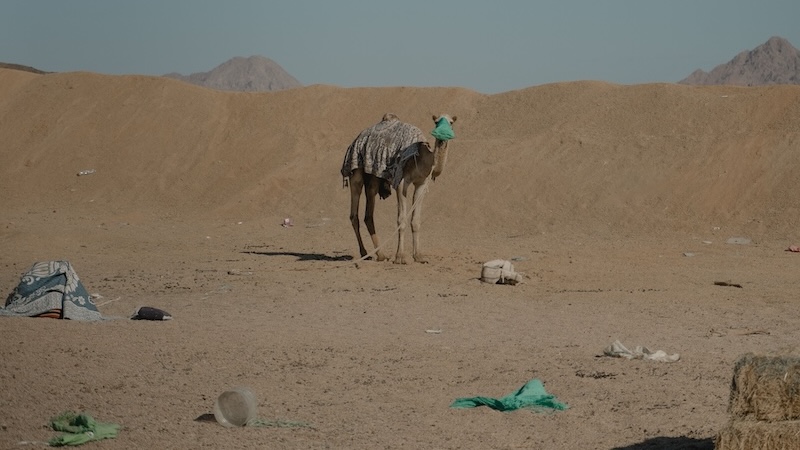
Photo by Tima Miroshnichenko on Pexels
I seem to be one of the few trauma writers that distinguishes between ancestral and generational trauma. Some writers seem to be unaware of the faint echo of ancient traumas; others conflate them with more recent events. I see them as distinct yet entwined. They converge where we’ve been forced to relinquish the deepest part of ourselves: self-abandonment.
To understand self-abandonment, we must delve into the interwoven nature of ancestral and generational trauma—and trace them to their source.
Ancestral v generational trauma
I define generational trauma as known events that happened to known people at known times. We may not know the exact details, yet we know that various tragedies struck our ancestors at certain times, generally going back three or four generations.
For instance, my great-grandfather Arthur Lister’s marriage failed. From census records, it seems this happened between 1901 and 1911. Regardless of the exact date, his wife Charlotte left the family, abandoning her five surviving children—a pattern of child abandonment that repeated in my mother’s generation.
Yet generational trauma does not happen out of nowhere. Failed relationships and child abandonment need a ground fertile with preexisting emotional wounds. That ground is the underlay of ancestral trauma—where our self-abandonment first occurred.
I define ancestral trauma as unknown events that happened to unknown people at unknown times. We don’t know four of the ‘Five W’s’—who, what, where, or when—but we do know the fifth and most important: why.
The ‘why’ was the emergence of shame-based patriarchal societies, where all feminine (emotional/sexual) aspects of being were shamed, denigrated, and attacked. Out of the need to protect ourselves from this onslaught came socially approved behavioural rules that people desperately tried to adhere to.
Trauma replicates
Here we glimpse the intertwined nature of trauma, old and new. My grandmother was thrown out of the family in 1932 after having an affair, abandoning my mother, who was nine at the time. Matthew 5:32 reads: “But I tell you not to divorce your wife unless she has committed some terrible sexual sin.” [1]
The Bible is the founding document of Western civilization. Admonitions like Matthew 5:32 are instructions in an ancient operating system. When “some terrible sexual sin” occurs, the old fracture triggers a new rupture by unconscious default.
That underlying pattern has repeated millions of times over the last two thousand years and continues to repeat. It also predates biblical times by several millennia. This is what must be understood: trauma replicates. Old grievances recur in new ways under new circumstances because the laws of energy permit nothing else.
Trauma is frozen energy; as such it obeys the Law of Conservation of Energy. It cannot be created or destroyed, only transmitted or transmuted. What cannot be transmuted must be transmitted—from ancestral down to generational trauma.
The mother wound
All traumas, generational or ancestral, can be traced back to what I call the mother wound—a break in genetic transmission that began around 4000 BC when peaceful Neolithic cultures were annihilated by nomadic warriors, the first patriarchs. This is academically known as the ‘Neolithic decline,’ a genteel term for an event whose shattering psychological importance is largely unrecognised.
Psychology lecturer Steve Taylor writes that “the main event in human history is a sudden, massive regression—a dramatic shift from harmony to chaos, from peace to war, from life-affirmation to gloom, or from sanity to madness.” [2]
Drought, desertification, and long-term famines in a great swathe from the Sahara through the Middle East and Arabia into Central Asia turned savannahs to sand. Vast tracts of arid land became uninhabitable and were abandoned, creating a life-or-death competition for remaining food and water sources.
Just as the land was abandoned, famine caused husbands to abandon wives, brothers to abandon sisters, the young to abandon the elderly, and—lastly—mothers to abandon children. In the emotional numbing that occurred to deaden the constant pain of famine and abandonment mothers became indifferent to their children’s needs.
Geographer James DeMeo describes “a pattern of famine-induced emotional contraction and contactlessness [sic]” [3] among the Ik people of Eastern Africa in the 1970s and 80s: “A passive indifference to the needs or pain of others manifested itself, and hunger, feeding of the self, became their all-consuming passion.” [4]
That numb indifference—technically called ‘depersonalisation’—severed the flow of healthy emotional nurturing from one generation to another.
Self-abandonment
Land, family, community, and children were abandoned. What we don’t see are the invisible losses. Those not physically abandoned were emotionally abandoned.
Deprived of the capacity for healthy self-nurturing by its lack of transmission, the final abandonment took place: self-abandonment. This is the abdication of responsibility for the maintenance and onward transmission of our genetic stream through sustainable families, sustainable communities, and a sustainable planet. It’s the place where we feel we’ve taken too many blows to recover from. There is no point continuing.
I see self-abandonment in the day that my mother’s family died, shattering and scattering several generations. In my grandfather, who walked out of the family during World War II. I see it in myself, in the steady erosion of my life from the 1990s through to recent years where trauma release has finally revealed its architecture.
To cope with the pain and shame of self-abandonment, we bury it in the deepest recesses of our unconscious. You’re probably not aware of it. Yet it’s down there, affecting us depending on our family history and, critically, our sensitivity.
“The dreadful”
And this is where we can glimpse self-abandonment rising to the surface: among the younger generations, each more sensitive than the last. The apathy, the indifference, the sense of having nothing to live for. Our children and grandchildren grasp the fakeness of our tech-stardust-sprinkled, Instagram-moment world—yet they also unconsciously sense the plague of self-abandonment that swept the world several millennia ago.
This is an apocalypse thousands of years in the making. German philosopher Martin Heidegger saw it in the late 1940s when he stated in a lecture that “the dreadful has already happened” —that humanity has lost fundamental contact with life.
Self-abandonment is the endpoint of trauma. A society built on it cannot survive forever. Our ability to recognise, release and resolve self-abandonment will be the litmus test of the last 6,000 years of what we call ‘civilization.’
Yet it is only one by one, like children emerging from a nightmare, that we can heal self-abandonment and return to a healthy and sustainable state of being.
References
[1] The Bible, Contemporary English Version
[2] Taylor, Steve; The Fall (2005)
[3] DeMeo, James; Saharasia (1998)
[4] Ibid.