
The day my mother’s family died
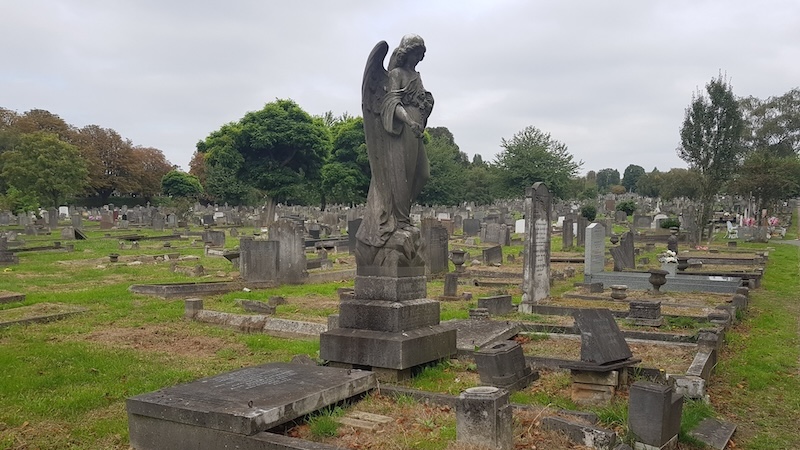
Image: Wandsworth Cemetery (Wikimedia / CC BY-SA 2.0)
.jpg)
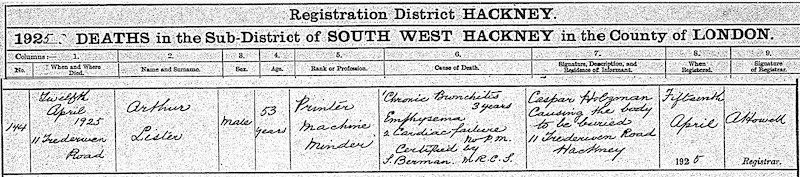
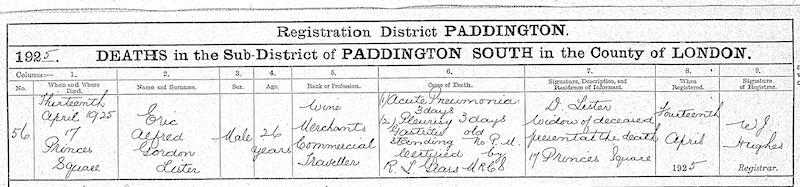
I know it now. My mother’s family died on 13 April 1925. That was the day my great-uncle Eric Alfred Gordon Lister died, aged 26. His father Arthur George Lister, 54, my great-grandfather, had died the previous day. This double-whammy disintegrated Arthur’s family, emitting a shockwave of grief, abandonment, identity loss, and shame that gripped the family for a century like a heart held in suspended animation.
This was the final act in a series of catastrophes that afflicted Arthur George and his first (and perhaps only) wife, Charlotte Brockhurst, who he married in 1895. Their first child, Violet—my grandmother—was born two years later. Then came two sons, Arthur Henry and Eric Alfred Gordon.
The 1901 United Kingdom Census captures a time of relative stability for Arthur and his family. It shows him living in Wandsworth, south London, with Charlotte and the three young children. (Bizarrely, when I lived in London in 1985, it was in Wandsworth—right at the family’s ground zero, but I never knew it until now.)
Arthur’s occupation in 1901 is listed as ‘tea merchant,’ with ‘grocer’ written above it. He seems to have spent his life reinventing himself in the food and beverage world. Yet the overwriting of one occupation with another hints at an underlying frailty. It wasn’t the last time one of Arthur George’s census records was inked—and then amended.
Marriage questions
The first clear blow came in 1904, when Arthur Henry, aged eight, died of measles.
By the 1911 census, more trouble is brewing—note the beverage pun—or, more likely, has already happened. Arthur is shown as married and living with five children: two of the previous three, and three new children (Thelma, Leslie, and John). But, as well as Arthur Henry, Charlotte is also missing.
Charlotte appears at a separate address, listed as a ‘Visitor’. She’s shown as married for 16 years, with six children, of whom five are living. Taken at face value, the marriage seems intact. Yet cross-referencing the two records leaves doubt.
Arthur’s record shows the same numbers: married for 16 years, six children, five living. Yet these numbers have been crossed out. Was Charlotte truly a visitor, or had she left the family? The address, in Streatham, is only two miles from Wandsworth—but nearly 50 miles from Arthur’s new address in Hove on the south coast. His occupation is now listed as ‘confectioner’—an unusual livelihood for the time.
By 1921 the rupture is clear. I cannot find a census record for Charlotte. Arthur’s shows him as living with a new wife, Helen Dye, with the three youngest of Charlotte’s children and an infant with Helen. The older children, Violet and Eric, have moved on. Arthur’s occupation is now a ‘licensed victualler,’ or publican.
I cannot find a legal record for the marriage of Arthur and Helen—or Ellen, as her birth certificate has it. Eighteen years Arthur’s junior and working for him (a ‘licensed assistant’), Helen may have been a barmaid who got ‘knocked up’ then claimed to be married in the census. Was the name Helen a preference or a smokescreen? A 1938 probate record mentions Ellen Agnes Lister as Arthur’s widow.
Tax fraud
What happened during the preceding decade—which included the 1914-18 war—is uncertain. Sometime after 1911 Arthur returned to south London and became involved in pub management, including The Castle Hotel in Eltham. His name is right over the door in big letters, with a definitive full stop. Around this time the government tax agency began an investigation that was to last a decade.
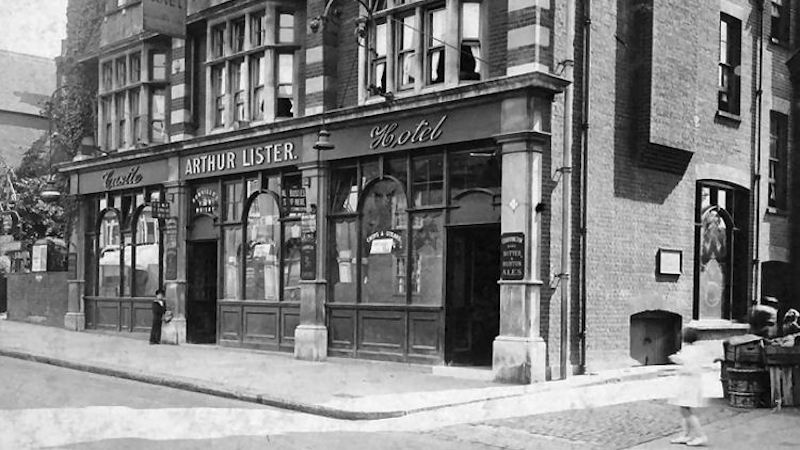
It’s possible the investigation was already underway when Arthur joined the enterprise. It’s also possible this is what ended Arthur and Charlotte’s marriage—though given the timing, it seems more likely to have already dissolved.
The tax fraud trial, involving Arthur and six other men, occurred at London’s Old Bailey in September 1922. This is centre stage for British legal matters, and the trial—for fraud of £46,000 (equivalent to £2.3m today)—was widely reported across the British Isles.
Arthur was found guilty and sentenced to six months in the Second Division (often applied to financial crimes, it was less punitive than the harshest penal regime, the Third Division). Of the five found guilty, Arthur received the shortest sentence, suggesting he was more accomplice than ringleader.
As a publican, Arthur would’ve been a well-known figure in south London and would’ve suffered the 1920s equivalent of cancellation. Whether his relationship with Helen survived is unknown, but his health and economic prospects declined.
On 10 April 1925 Eric A. G. Lister contracted acute pneumonia. It seems this was too much for Arthur, who suffered from chronic bronchitis after the trial. While Eric wasted away at the Beaumont Hotel in Bayswater, on the 12th Arthur had a heart attack some eight miles east in Hackney. Eric died the following day, leaving a young widow.
Impact
It’s difficult to imagine the impact of the combined sudden deaths of father and son, but tragedy had already spilled down to the younger generation.
In April 1921, while the tax investigation rumbled on, Violet married my grandfather, Wing Commander Harold Blackburn, a pioneering pilot and war hero. It, too, was a doomed marriage. In November that year she delivered a boy, Edward, three months prematurely. He died after 25 hours. My mother Susan was conceived at exactly the time the fraud trial took place the following year—a time of immense stress.
Violet eventually had an affair and was ejected from the family, repeating her mother’s pattern of abandoning her children—in this case my mother. The nucleus of Arthur’s family died and, a generation later, so did Violet’s. My parents stuck together. The abandonment became emotional rather than physical. There was a semblance of a family, but its heart was broken.
Within two months of the double death, Leslie—Eric’s younger brother—emigrated to New Zealand. John followed in 1929; my own family in 1973. The drivers for this sudden migration to the other end of the world remained hidden for another half century. What is notable is that Arthur’s two daughters—who married and changed names—stayed in Britain. His two surviving sons, their family name blackened, left. They went as far as possible from the scene of the crime to start again with a squeaky-clean identity.
We can run as far as we like, but we carry these patterns in our DNA. Trauma, like all energy, obeys the Law of Conservation of Energy. It cannot be created or destroyed; it can only be transmitted—until someone identifies and transmutes it.
Clues
With hindsight, there were clues—two of them—which I didn’t know how to read. This is often the way with trauma-informed genealogy. Data points seem to be insignificant and flat until—suddenly, with a jolt—they leap out at you.
The first is Eric Alfred Gordon Lister’s burial card from Wandsworth Cemetery. It quietly sat in my files for years, meaning nothing until this story erupted. How it survived and came down to me, amid the family’s many upheavals, is both mystery and miracle.
The smoke and mirrors around the family’s disintegration continue past Eric’s death. He is officially registered in the Wandsworth Cemetery database with the misspelled surname Lester. When I tried to order the burial record, the website failed.
The second clue is more tenuous, a whiff of suspicion from years of sleuthing for disturbances in the carefully tilled loam of the genealogical record.
In a family tree drawn up by my mother late in her life, both her maternal grandparents are missing. Charlotte is entirely absent, a gaping wound on the tree. Arthur George’s name is also missing—but another name has been substituted.
Eric Alfred Gordon Lister.
My mother named her dead uncle in place of her grandfather. The record has been signalling—drowning, not waving—that, despite his untimely demise, Eric matters.
Legacy
When I first discovered the day the family died, the deaths within 24 hours of Arthur and Eric, my first reaction was anger—anger that my mother never knew the truth of her own upbringing. Though some knowledge of Eric came down to her, it was garbled. Of her grandparents and the tax trial I doubt she knew (or remembered) anything.
A memory also came down to her about her older sibling, Edward, who died after 25 hours. She failed to establish proof. It was left to me to do that another 30 years later, discovering his unmarked grave in Hitchin Cemetery in Hertfordshire—yet another shameful event in the family narrative that had to be unearthed and integrated.
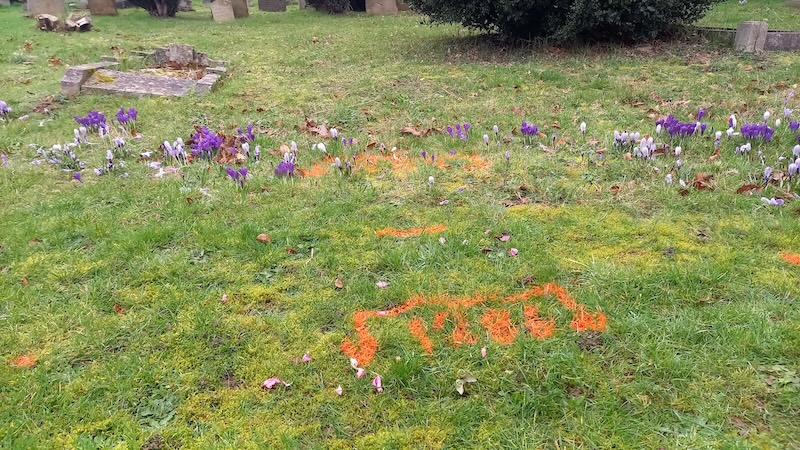
And all that time Eric Alfred Gordon Lister lay in splendid solitude in Wandsworth Cemetery as this story emerged over decades, fragment by fragment.
From this remove in time, 101 years later, it feels like the family took a blow to its solar plexus on 12-13 April 1925 from which it never recovered. In 1985, staying with family friends, I picked up a novel by Gabriel Garcia Marquez, A Hundred Years of Solitude. Something about it struck me so powerfully that, 41 years on, I can still recite its opening sentence—which is all about fathers and sons:
“Many years later, as he faced the firing squad, Colonel Aureliano Buendia remembered that distant day when his father took him to see ice.”
Eric A. G. Lister lived out our family’s hundred years of solitude. He, along with his unfortunate father Arthur, has been recognised and rehabilitated. The family died in April 1925, of heart failure. It has finally resumed beating—the steady beat that only comes from a truthful narrative and a clear sense of known, verified identity.