
Fear, shame, and irresponsibility – trauma’s three barriers
When we recognise trauma in our own lives and choose to engage with healing, we’re immediately confronted by a seemingly unsurmountable obstacle: how do I do it? The trauma—if we can feel it at all—seems vague, remote, inaccessible. That’s because it’s securely locked away behind three barriers: fear, shame, and irresponsibility.
Trauma resides in our deep unconscious. In it, as Laura Knight-Jadczyk writes, “are found unfathomable depths of the rejected, the unacknowledged, the unrecognised, the unknown and undeveloped elements of our existence.” [1]
Every unconscious issue has three common attributes. We are:
- Afraid of it
- Ashamed of it
- Unwilling or unable to take responsibility for it
These are not random traits. They’re specifically intended to keep trauma locked in place. They are homeostatic mechanisms designed to contain and minimise trauma to keep you functioning as effectively—from a survival perspective—as possible.
1. Fear
Fear is the gatekeeper of the unconscious.
Not rational fear, but survival fear. All trauma is survival trauma.
Survival fear has been wired into us through centuries of social conditioning, punishment, and repression. To feel too much, to express too freely—emotionally or sexually—once carried real consequences. In much of the world it still does. That historical danger has not disappeared; it’s simply gone underground—into our unconscious.
What remains is a system that interprets emotional truth and healthy expression as threats. When trauma begins to surface—through anxiety, discomfort, or even curiosity—fear steps in.
Fear tells us: don’t go there.
2. Shame
Fear guards the gate; shame builds the wall.
Unconscious shame is not the fleeting embarrassment we recognise in everyday life. It is something far more pervasive—a kind of emotional concrete that seals off the deeper layers of our psyche. It’s accumulated over several thousand years of social conditioning through extreme violence—what we naively call ‘civilization.’
This shame attaches itself to all that has been historically suppressed:
- Emotions
- Bodies
- Sexuality
Over time, this creates an internal chasm—what Michael Picucci calls the ‘sexual-spiritual split.’ [2] What’s acceptable remains conscious. What isn’t becomes buried.
As a result, entire layers of trauma—personal, generational, ancestral—are walled off from conscious awareness. We don’t just hide our wounds. We lose access to them.
Shame tells us: nothing to see here.
3. Irresponsibility
The final barrier is the most challenging. Irresponsibility does not mean laziness or neglect. It means the refusal—or inability—to say: this is mine to face.
Much of what we carry is not ours in origin. It may belong to our parents, grandparents, the broader culture we were born into. But once it manifests in us, it becomes our responsibility to process.
Instead, we do what we’ve always done:
- Deny
- Deflect
- Blame ourselves or others without understanding the source
Denial isn’t accidental. It’s part of the trauma itself. When an experience is too overwhelming to process, the experience is rejected—and the denial is inherited along with the trauma.
Irresponsibility says: this isn’t mine.
Breaking the lock
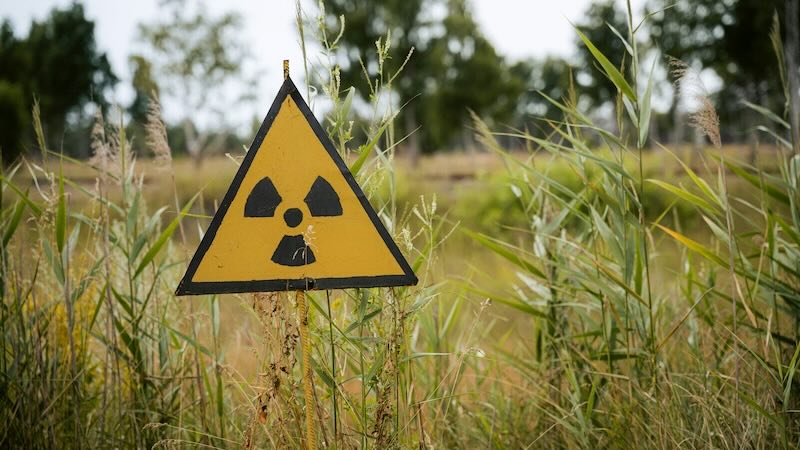
Fear stops us from approaching the wound. Shame hides it from view. Irresponsibility ensures we never claim it as ours to heal. Together, they form a closed system. On the surface, it looks like the image above—a pleasant green field with not very much going on. Look closer and you’ll see the danger signs. Closer still, the system behind them.
Within that system, trauma does exactly what it’s always done: persist.
Healing does not begin with techniques or strategies. It begins with recognition. To make the unconscious conscious is to confront fear without retreating, to see shame without collapsing into it, and to take responsibility without self-blame.
This is not comfortable work. But there is no other way. Until these three barriers are dismantled, the unconscious will continue to run the show—quietly, persistently, and with absolute authority.
As Carl Jung said: “Until we make the unconscious conscious, it will continue to rule our life and we will call it fate.”
Next steps
For further resources on generational trauma, both free and paid, please click on this image.
Photo by Kilian Karger on Unsplash
References
[1] Knight-Jadczyk, Laura, Debugging the Universe (2001)
[2] Picucci, Michael; The Journey Toward Complete Recovery (1998)