
All trauma is survival trauma
- 26 April 2026
- Posted by: Michael H Hallett
- Category: Ancestral trauma , Generational trauma ,
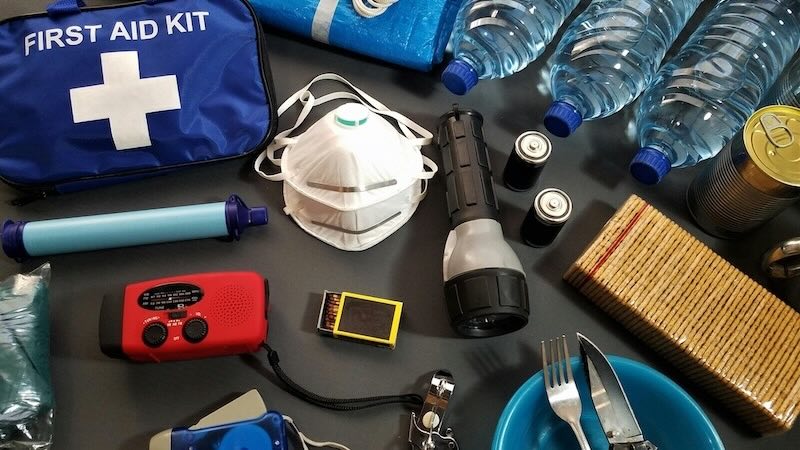
We tend to think of trauma as something exceptional—something that happens in extreme situations, to other people, at other times. This is a naïve and comforting illusion. Trauma is not the exception. It’s the rule. It’s woven into the fabric of our lives, our bodies, our cells, our inheritance. Every trauma begins the same way: as a perceived threat to survival.
This doesn’t mean only physical threats. The nervous system does not distinguish between physical and emotional dangers. Any threat to your safety, your belonging, your status, or your identity is registered by the same primitive circuitry. The body moves instantly into survival mode—the classic ‘four F’s’: fight, flight, freeze, or fawn.
The process is initiated by a discharge of adrenaline into the endocrine system. Physiologist W. B. Cannon writes that “The response of the heart is prompt—within ten seconds after the beginning of the discharge of adrenin from the adrenal glands the pulse accelerates.” [1]
Freeze and fawn
But trauma is not the threatening event itself. Trauma is what happens when the system can’t resolve the threat.
When fight or flight aren’t possible—when escape fails, when resistance is futile—the system does something remarkable. It flips. Action-packed fight or flight becomes inert freeze and fawn. Like DNA base pairs, the four F’s are actually two pairs of potential behaviours.
“All the vital mechanisms… have only one object, that of preserving constant the conditions of life in the internal environment.” — Claude Bernard [2]
Freeze and fawn are pure survival strategies: buy time. We freeze, like a stick insect on a log, hoping not to be noticed. Or we fawn, pretending to befriend our would-be predators, making ourselves seem valuable to them, or at least innocuous. This pattern is evident in so-called ‘Stockholm Syndrome,’ where hostages side with and advocate for their abductors.
In both cases, we buy time to find a way out. But the psychological experience—fear, dread, shame, worthlessness, abandonment, resentment—has no way out. So, our psyche buries the overwhelming experience. Trauma is pain frozen in time, lodged not just in memory but in our perpetually tense musculature, jangling cells, and hyper-anxious nervous system.
Unfinished survival
This is the critical point: all trauma is unfinished survival.
The danger may pass, but the body doesn’t register that it’s passed. The nervous system remains on high alert, scanning for threats that are no longer there, or perhaps were more perceived than real in the first place.
Over time, this unresolved survival energy becomes the background hum of our lives, a continuous dull ache we long ago stopped noticing. And it does not stop with us.
Trauma ripples outward and forwards, carried through families, communities, and entire cultures. A direct survival threat silently becomes inherited patterning—emotional reflexes, behavioural tendencies, unexplained fears. By the time it reaches us, it often no longer looks like a threat. It looks like personality. Habit. A protective shell we can’t live without. Early psychoanalyst Wilhelm Reich writes:
“The character structure of modern man, who reproduces a six-thousand-year-old patriarchal authoritarian culture, is typified by… armouring against his inner nature and against the social misery which surrounds him. This… armouring is the basis of isolation… fear of responsibility, mystic longing, sexual misery, and neurotically impotent rebelliousness…” [3]
We are born into systems shaped by unresolved survival responses. Raised by caregivers whose own nervous systems were rubbed raw and jagged by threat. Immersed in cultures where the abnormal has been normalised in the long centuries since the rise of what we wishfully call civilization.
Beyond survival
So, when you feel anxiety without cause, shame without origin, or fear without context, try asking a different question.
Not: What’s wrong with me?
But: What threat is my system still trying to survive?
Because at its root, every trauma—no matter how complex, how ancient, or how disguised—began as a moment where someone’s system, somewhere, perceived: This is not safe. I may not survive this.
Healing, then, is not about fixing what is broken. It’s about completing what was interrupted. It’s about teaching the nervous system, gently and repeatedly, that the threat has passed. Only then can the body release what it’s been holding—sometimes for a lifetime, sometimes for generations.
Only then do we step out of panic, out of the deep pull of ancient, unresolved survival struggles—and into the ‘now’ moment of present life.
Photo by Roger Brown on Pexels
References
[1] Cannon, Walter Bradford; The Wisdom of the Body (1932)
[2] Bernard, Claude; Les Phenomenes de la Vie (1878)
[3] Reich, Wilhelm; The Function of the Orgasm (1942)