
Mother & father wounds – the arrested development of humanity
The slightest critical glance at the state of planet earth reveals a human species in physical, emotional, and intellectual decline. This decline is due to a collective failure to grow into mature and responsible adulthood—what is known as arrested development. More precisely, it’s due to a cluster of mother- and father-related emotional wounds.
There are just three key principles/processes to understand:
- Inherited family patterns—traumas, strengths and quirks
- Individual level of sensitivity to these inherited patterns
- Arrested development of childhood developmental tasks
The level of impact is determined by the intensity of the family pattern x the level of sensitivity (we are literally dealing with emotional mathematics).
The cumulative effect of these processes is a constellation of damaged behaviours that are either mother wound- or father wound-dominant, depending on whether they relate to a failure of feminine or masculine genetic programming and role modelling.
Inherited patterns
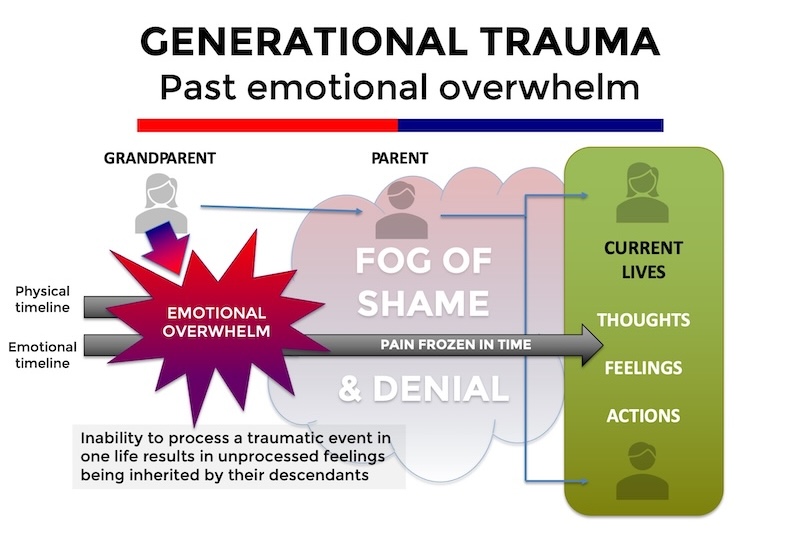
Family patterns pass from generation to generation through a mechanism called epigenetic inheritance. Trauma passed in this way is called generational trauma.
Trauma forms when someone—whether us or one of our ancestors—experienced a situation of emotional overwhelm. The overwhelming feelings cannot be processed and remain stuck in the unconscious, as if the trauma was still happening. They are passed down genetically and emit distress signals in the lives of descendants.
Generational trauma is literally someone else’s Post-Traumatic Stress Disorder.
While trauma dominates our experience of inherited family patterns, it’s important to note that we can inherit positive qualities and what we might call quirks—behaviours without any particular effect.
Strengths & quirks
What strengths and quirks have passed down to you, perhaps unrecognised?
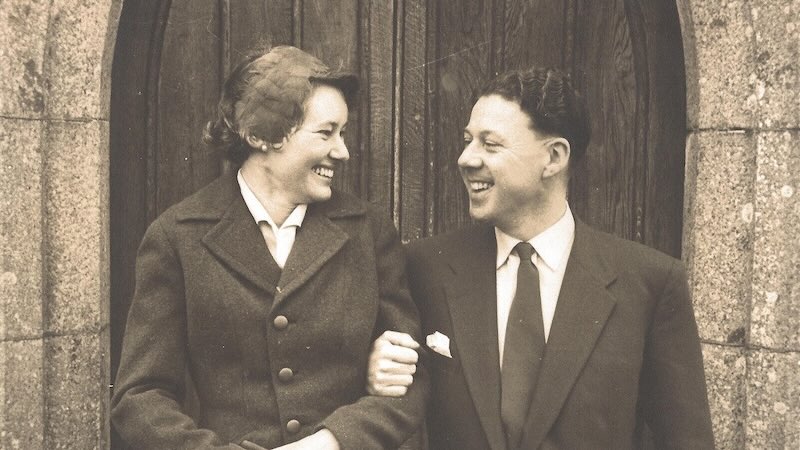
My grandfather survived World War I as a pilot in the Royal Flying Corps. In April 1917, the life expectancy for new pilots was three weeks. My father survived World War II as a flight test engineer—a dangerous occupation with a 20-25% likelihood of death. That against-the-odds resilience is in my bones, and I’ve needed it.
A client revealed that her mother always prepared chicken by covering it in salt then washing it off. She did the same thing for decades, simply repeating a pattern observed in childhood without realising that virtually no one else does this. When the pattern is recognised, it can be discarded—or maintained as a connection to family.
My father always cooked with an Italian aperitif called Cinzano. I say ‘always’, but what I really mean is I can remember nothing else. I have always cooked with Cinzano. I know it’s an inherited pattern. It reminds me of the healthy meals my parents prepared.
READ MORE: What is generational trauma?
Whether inherited patterns are traumatic, positive, or quirky, they are amplified by…
Human sensitivity
The Psychology Wiki describes human sensitivity as follows:
“The sensitivity or insensitivity of a human, often considered with regard to a particular kind of stimulus, is the strength of the feeling it results in, in comparison with the strength of the stimulus. The concept applies to physical as well as emotional feeling.”
Other terms that reference human sensitivity are emotional sensitivity, emotional quotient (EQ), emotional intelligence, awareness and consciousness.
Elaine N. Aron has extensively studied human sensitivity. Her research is documented in The Highly Sensitive Person. She writes:
“One in every five people is born with a heightened sensitivity; they are often gifted with great intelligence, intuition and imagination, but there are also drawbacks. Frequently they come across as aloof, shy or moody and suffer from low self-esteem because they find it hard to express themselves in a society dominated by excess and stress.”
Imagine a bell curve with most people in the middle (i.e., they have a moderate level of sensitivity). Some have an unusually low level of sensitivity (of their own feelings and those of others) while others—Aron’s 20%—have a relatively heightened sensitivity.
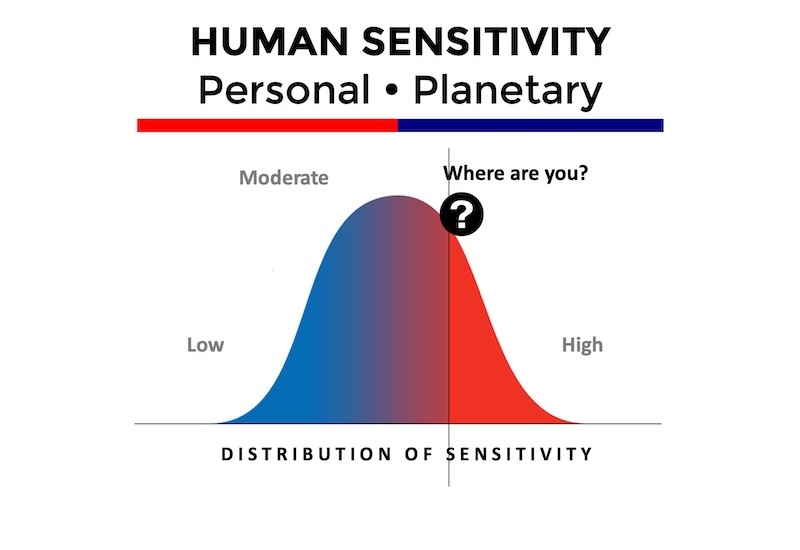
The more sensitive we are, the more we feel the buried family patterns pulsing in our genetics, and the more those patterns manifest in our lives:
- Repetition of ancestral patterns (often quite precisely)
- Variation of ancestral patterns (same principle, different appearance)
- Rejection of ancestral patterns (unconsciously doing the opposite)
READ MORE: What is human sensitivity?
The more we’re impacted, the more our childhood development is impacted. This is known as…
Arrested development
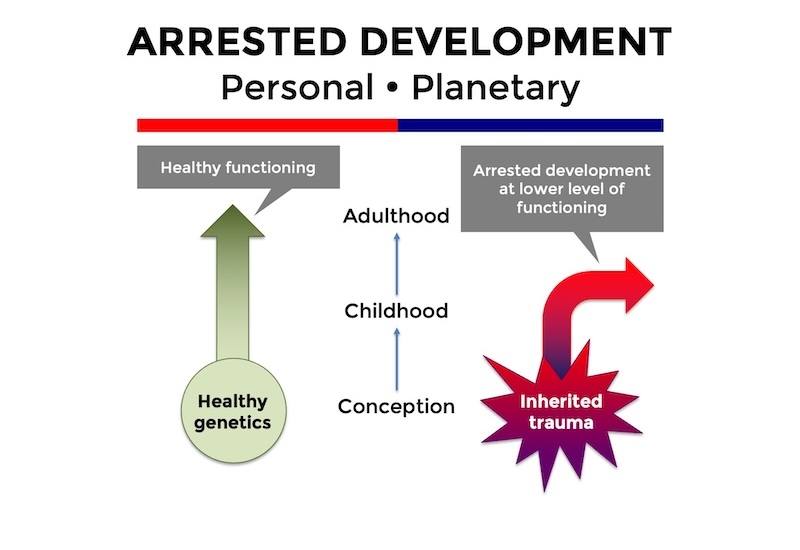
Arrested development originates in traumatic events in our parents’ or grandparents’ lives, usually during their adolescence or early adulthood, before psychic development stabilises in adulthood. This results in improper nurturing and role-modelling in our own lives, leaving us emotionally stuck in childhood.
In her best-selling memoir of family trauma, The Architect of Desire, Suzannah Lessard writes with simple eloquence: “I had failed to develop an adult context for myself.”
As human beings, we have three key psychological ‘development arcs,’ or circuits, leading from infancy to maturity:
- Mother-child arc from conception to about age 6½: connection, communication, community. It paves the way for healthy nurturing, self-worth and belonging.
- Father-child arc from about ages 6½ to 13: boundaries, negotiating with others, healthy work. It paves the way for the responsible use of power.
- Puberty arc from about ages 13 to 19½: integrating the first and second circuits to become a responsible, productive, community-centric, sexually active adult.
I use the quite precise span of 6½ years for each circuit. It’s no coincidence that from thirteen to nineteen is a specific life stage. It’s important to note that each circuit can only develop healthily to the extent that the previous circuit(s) developed healthily.
The more we suffer as individuals, the more we suffer at the planetary level. From the state of the planet, it’s clear we’re all stuck with some level of arrested development.
READ MORE: What is arrested development?
Mother & father wounds
The cumulative effect of inherited trauma, high sensitivity, and arrested development is two overlapping clusters (or constellations) of psychological damage. These can be broadly categorised as mother wounds or father wounds, depending on which development arc they relate to, yet they all interpenetrate each other.
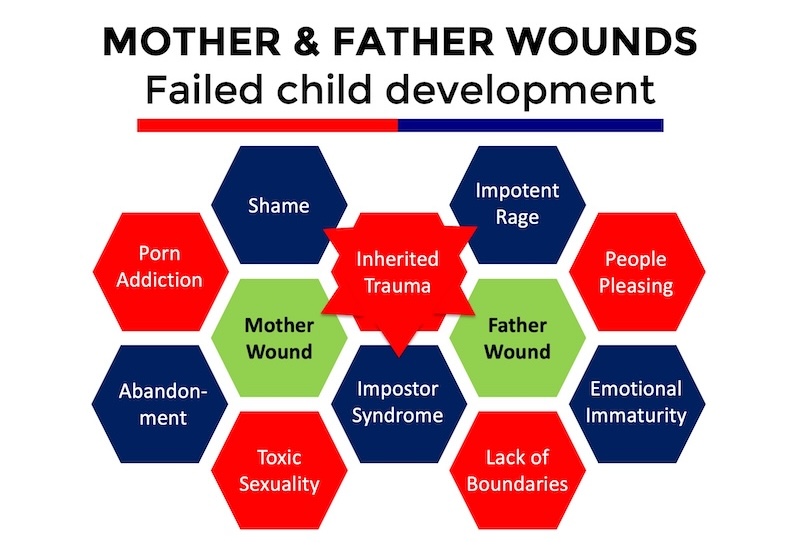
These mother and father wounds include (but are not limited to):
- Inherited Trauma—a wide array of possible traumas from instances of emotional overwhelm our ancestors suffered and were never able to process, such as divorces, financial failures, sexual shame, and grief
- Shame—The piece that obscures all the other pieces, including itself: a fog of unconscious shame that society is largely (and wants to remain) oblivious to
- Porn Addiction—very little to do with sex and mostly a reflection of a damaged connection to our own life energy, porn addiction is an extraordinary mirror of the wounds of our deep unconscious—if we have the courage to look within
- Abandonment—a recurring theme among those affected by this constellation; very often having affected our parents and grandparents then replicated in our own childhoods and adult relationships
- Toxic Sexuality—an overemphasis on or withdrawal from sex and sexuality; also manifests in erectile dysfunction, premature ejaculation and frigidity
- Impostor Syndrome—the feeling of being a fraud, often despite evidence of being perfectly capable, causing unconscious withdrawal from the world
- Lack of Boundaries—an inability to stop others imposing their will on us and, equally, an inability to stop inappropriately imposing our will on others
- Emotional Immaturity—instability, irresponsibility, people pleasing and other disproportionate responses in place of emotional resilience, ‘doing the right thing’, and maturity
- People Pleasing—a desperate need to appease others emotionally through surrendering our own sovereignty and aligning with their wishes and directives, no matter how unhealthy and self-centred
- Impotent Rage—a helpless, unexpressed, constantly bubbling undercurrent of rage against anything and anyone over having to suffer this condition
I could throw in emotional irresponsibility, narcissism, denial and more.
These are all generalisations reduced to simple labels. The important thing is to notice that while we may recognise one issue in our life, it’s in fact part of a wider web. Only by recognising the true source of these dysfunctions can deep healing be effected.
Do you recognise these clusters in your own life? Ready to start cleaning it up? Get in touch.
READ MORE: What is the mother wound?
READ MORE: What is the father wound?
Photo: Hallett family