
Ancestral trauma #9 – Apathy and futility
- 2 June 2026
- Posted by: Michael H Hallett
- Category: Ancestral trauma ,
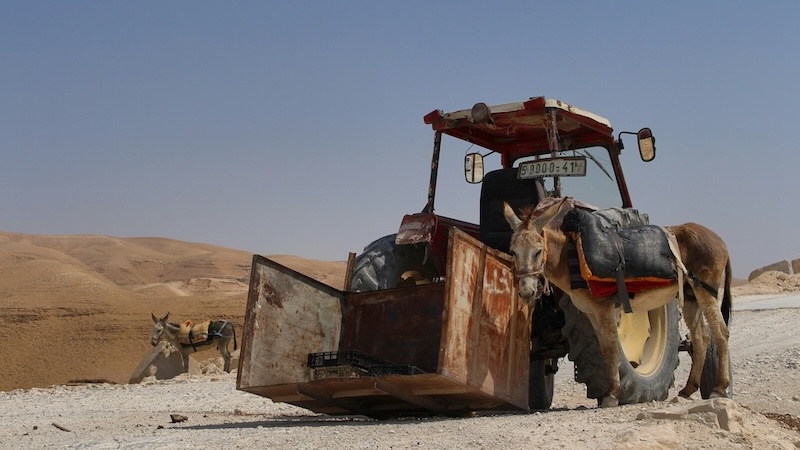
Photo by Iva Rajović on Unsplash
In Ancestral trauma #8 – Fear of famine, I describe how long-term drought in the Sahara, Middle East and Central Asia led to desertification and famine. Apathy and a sense of futility are byproducts of famine.
In Saharasia, geographer James DeMeo describes the psychological breakdown that accompanies famine, as witnessed among the Ik peoples of East Africa in the 1980s:
“A passive indifference to the needs or pain of others manifested itself, and hunger, feeding of the self, became their all-consuming passion. They sat in the midst of great heat in drought, thin and exhausted, losing interest in the pleasures of life…”
DeMeo goes on to describe “a pattern of famine-induced emotional contraction and contactlessness [sic]” that became humanity’s ‘new normal.’
Competition for resources eventually turned hunter-gatherer and early agricultural societies into nomadic warriors who seized remaining food and water sources. The need to kill or be killed entered the human equation. This event—known academically as the ‘Neolithic decline’—spanned several thousand years. It is recorded in the Bible as ‘The Fall’.
Peaceful Neolithic fertility cults gave way to the first patriarchies, who eventually spread their violent psychosocial model around the globe. Humanity eventually harnessed science and technology to banish famine from much of the world. Yet for all this social and technological change, the emotional detachment remained.
From famine to apathy
Long before modern psychology, long before the language of trauma, humanity endured repeated cycles of famine—slow, grinding collapses where resources vanished, bodies weakened, and survival became uncertain.
These were not momentary shocks. They were prolonged exposures to helplessness. The image above captures the apathy of the donkey, standing immobile for hours in baking heat, and the futility of trying to grow food in a parched desert.
When there is no food, no control, no certainty, the nervous system shuts down. Hope becomes dangerous. Action becomes futile. As I describe in A brief history of shame, all feelings become unbearable.
So, the system adapts. It learns not to care. This is not a moral failure. It’s an evolutionary response. Apathy as insulation. It’s called depersonalisation.
Depersonalisation
Depersonalisation Disorder (or Syndrome) is the experience of not being fully plugged into our own bodies. We are physically present yet emotionally remote. The World Health Organisation’s ICD-10, the International Statistical Classification of Diseases and Related Health Problems, describes Depersonalisation Syndrome as follows:
“Among the varied phenomena of the syndrome, patients complain most frequently of loss of emotions and feelings of estrangement or detachment from their thinking, their body, or the real world.”
One of the most pervasive patterns in the human system is not anxiety, not shame, not even fear. It’s apathy. A quiet, pervasive disengagement from life. A reluctance to feel, a refusal to act, and a numbness which presents itself as normal—yet is anything but.
This inner ‘emotional apathy’ is increasingly surfacing as outer, physical apathy.
I’m increasingly aware of young people—men in particular—with chronic apathy. No sense of direction. No ‘get up and go.’ Just a general lostness that no therapeutic model seems able to explain—let alone redress—and, consequently, a longing for anaesthetics: food, alcohol, weed, gaming, social media. Anything to help the slow, futile hours pass.
Choosing out
Every unconscious pattern serves a purpose.
Apathy and futility are no different. They protect us from overwhelm. If we do not engage, we cannot be disappointed; if we do not feel, we cannot be hurt; if we do not act, we cannot fail. If there is no destination, there is no journey, nothing to be gained.
But the cost is profound. We lose access to vitality, to creativity, to the very impulse that drives life forward. We sit and wait and watch—yet for what?
This apathy cannot resolve itself. We must choose out of it.
Humanity’s problem is that it can’t feel that it can’t feel. Every single problem we face stems from this, including any sense of apathy or futility.
When we understand this, resolution becomes apparent: restoration of our lost capacity to feel—and that means feeling the pain of all that was lost, right back to its inception point at the Fall.