Ancestral trauma #8 – Fear of famine
- 1 June 2026
- Posted by: Michael H Hallett
- Category: Ancestral trauma ,
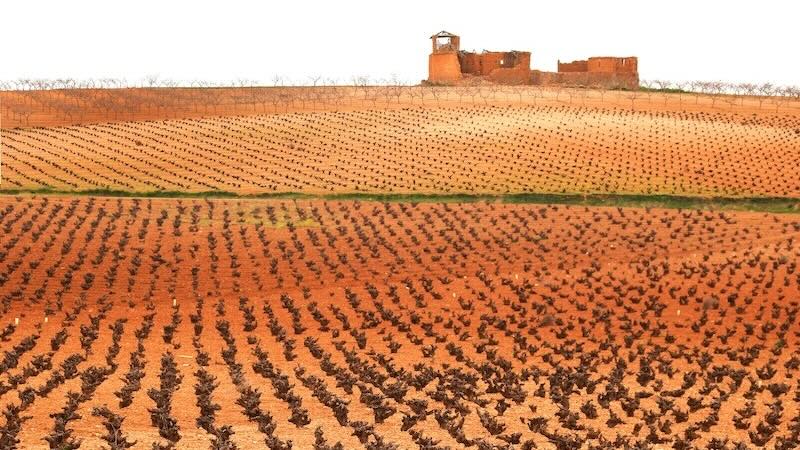
Photo by Peter Muscutt on Unsplash
When I was a child, I was sometimes puzzled by my mother’s food choices. She had a particular love of lard on toast—rendered pig fat on burnt, stale bread. Sweetbreads—the thymus or pancreas of a calf or lamb—were another favourite.
It took me years to realise her foodie favourites were simply what felt like luxuries during rationing in Britain in World War II. According to the ancestry site FindMyPast:
A typical person’s weekly ration allowed them 1 egg, 2 ounces each of tea and butter, an ounce of cheese, eight ounces of sugar, four ounces of bacon and four ounces of margarine. Meat wasn’t rationed immediately, but when it was its availability was decided by price rather than points, meaning cheaper cuts quickly became the most popular for many housewives.
It took longer to realise that beneath wartime food shortages lurked a much deeper fear: famine. Scratch the surface of our carefully ordered lives—the well-stocked supermarkets, market-driven economic systems, our obsession with low food prices—and there lurks something far older, more primitive, more mechanical, quietly driving the plough.
Fear. Not a personal fear. A collective one: fear of famine.
Famine: the catastrophe we forgot
Some six thousand years ago, humanity encountered a catastrophe so vast that its psychological consequences still reverberate through us today. Its academic name is the Neolithic decline, though this term—suggestive of genteel long-term decay—gives no sense of the enormity and impact of this event.
As I describe in A brief history of shame, long-term drought turned fertile land into desert from the Sahara deep into Central Asia. Food systems collapsed. Communities fractured under the strain of survival. Starvation was not an abstract concept—it was immediate, visceral, and ever-present. Geographer James DeMeo describes the impact:
A passive indifference to the needs or pain of others manifested itself, and hunger, feeding of the self, became their all-consuming passion… The very old and young were abandoned to die. Brothers stole food from sisters, and husbands left wives and babies to fend for themselves. While the maternal-infant bond endured the longest, eventually mothers abandoned their weakened infants and children. [1]
This event, mythologised in the Bible—the founding document of Western civilization—as The Fall, was not simply a spiritual allegory. It was a lived, physiological trauma. A fight-or-flight moment that unfolded over several thousand years without resolution.
And trauma, when not processed, does not disappear. It goes underground.
From fear to pattern
When famine strikes, the body and psyche reorganise around survival. This is not optional. It is adaptive; evolution in real time. But what happens when the famine ends?
The external conditions may change. The internal programming does not. Instead, it becomes embedded, passing down through generations as inherited trauma, shaping behaviour long after memory of the original event has faded.
The result? A species that behaves as if starvation is always just around the corner.
Look at our world through this lens and a pattern emerges. Mindless accumulation. Endless competition. Relentless quantity over quality. Short-term survival and emotional anaesthesia at the expense of long-term nurturing and sustainability.
Think of the American Midwest turned into a giant bread bowl, generations of farmers in debt to faceless fertiliser and farm equipment conglomerates. James McMurtry, a singer-songwriter with a penchant for the bleak, captures it perfectly in ‘Levelland’:
Daddy’s cotton grows so high
Sucks the water table dry
His rolling sprinklers circle by
Bleeding it to the bone
The unspoken belief: there isn’t enough.
This belief sits at the core of our economic systems, our environmental destruction, and our personal anxieties and addictions. The entire obesity crisis is a glaring, red flag manifestation of our fear of famine.
We operate on a survival-driven paradigm where competition justifies almost any action—particularly if it yields lower food prices, larger portions, or 2-for-1 Friday night specials.
But survival from what? Not from present reality, but from an ancient memory.
Famine and the fall in human consciousness
Severe, prolonged stress—such as famine—does more than change behaviour. It changes how we think.
Under extreme conditions, human behaviour shifts toward a narrow, survival-focused mode. Emotional responsiveness diminishes. Community fragments. Efficiency overrides empathy. This shift, once necessary for survival, becomes pathological when normalised.
We now call it civilisation.
Fear of famine is not the only trauma we inherited from our ancestors who survived The Fall. As I write in What is ancestral trauma? humanity carries various ancestral core wounds, including separation from Nature, emotional frozenness, and deep sexual anxiety.
Yet fear of famine is perhaps the most immediate. It’s why we have not just breakfast, lunch and dinner, but elevenses, tea, and supper—with a few snacks in between. Whenever anxiety strikes, we get the munchies because this ancestral trauma has been activated.
The tragedy is not that famine happened. The tragedy is we never integrated it.
Instead, we built an entire world on top of it—systems, beliefs, identities—all shaped by an unexamined assumption of scarcity. We:
- hoard because we fear loss
- compete because we fear lack
- disconnect because connection feels unsafe… and might ask us to sacrifice our own portion
And yet, in much of the modern world, the famine is over. The shelves are full; the danger passed. But our unconscioushas not caught up. Until it does, we’ll continue to act as if we are starving—even while drowning in abundance.
References
[1] DeMeo, James; Saharasia (1998)