
Are you and your family running on empty?
- 11 May 2026
- Posted by: Michael H Hallett
- Category: Generational trauma ,
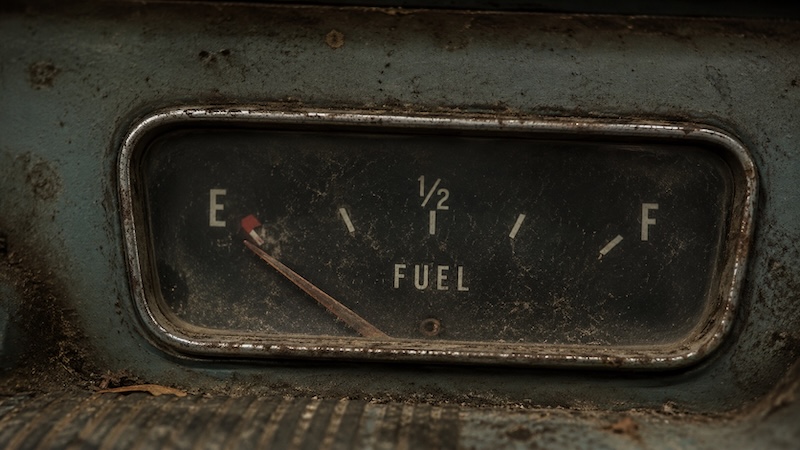
When I was growing up in the 1970s, the songwriter who spoke most powerfully to my sense of abandonment, depersonalisation and disaffection was Jackson Browne. His 1977 live album Running on Empty, recorded not just during live shows but backstage, in motel rooms and on a Continental Silver Eagle tour bus (somewhere in New Jersey), felt like the soundtrack to my own rootless existence.
I even spent a few years in America, living out of suitcases and motels, working on IT projects from, yes, New Jersey to Oklahoma in the steel, food, and pharmaceuticals industries. It’s where I learned to break down mechanical processes—like inherited trauma.
Running on empty
The title track of Browne’s album captures this sense of wheels turning without aim, of not having any roots worthy of the name, of not knowing—and too numbed to even care about—what lies ahead. Running on, from nowhere, through nowhere, to nowhere:
Looking out at the road rushing under my wheels
Looking back at the years gone by like so many summer fields
In ’65, I was seventeen and running up 101
I don’t know where I’m running now, I’m just running on
Yet it’s only recently that I’ve realised the extent to which I—and my family—have literally been running on empty. Emotionally and financially, stability and community, structure and sustainability—the gauge has been stuck on zero.
Gleaming moments
Even when I was a $300/per hour IT consultant in the Y2K gold rush, the money was pouring in—but the container to harness it for long-term stability and growth wasn’t there.
Yet it didn’t start with me. I can see the same cycles of abandonment, displacement, looking for a new life without realising we carried its ruination within ourselves: in my parents, both with their double-abandonment experiences. In my grandparents, none of whom were still around by the time I was born. In my great-uncles who emigrated in the 1920s to escape the scandal of their father’s tax fraud trial—a yo-yo cycle between Britain and New Zealand I looped through as a teenager in the early 70s, and my son has now looped into. (I was, of course, born in Jersey—the old one.)
I see gleaming moments in the past where the family’s engine sputtered and the reality of its emptiness was briefly laid bare. My mother’s father was a famous aviator before World War I, twice decorated for bravery during the war. Yet this parlayed into a saga of loss, betrayal, backlash, and abandonment—which was then left behind.
My father’s father was disinherited in the 30s, possibly over a £1 speeding ticket. During World War II he walked out, completing his abdication of responsibility, retreating into a sham life with a pretend wife. Running on empty, running on.
The running stops here
What about your family? Has it been running on empty? Can you see the movements, the failed reinventions, the desperate attempts at connectivity and respectability?
Behind all these lies a single point of failure: under-investment. Of nurturing, of role-modelling, education, financial backing; of self-belief. Generational trauma paralyses us from seeing anything but the immediate moment—a frozen fight-or-flight flashpoint from which running on empty, running on, seems the only escape.
Generational trauma literally propels us into loops of trying to outrun ourselves, our families, our past. Yet we carry it like a wrecking ball in our DNA. When we’ve run down all the roads in our life and realised there is no escape, we reach a moment—I reached it in 1994, curled up on the floor of an unfinished house after my then-partner left—where we step off that Continental Silver Eagle. The running stops here.
Image: ChatGPT