
‘Kore’ – the void where there are no clues
- 20 April 2026
- Posted by: Michael H Hallett
- Category: Generational trauma ,
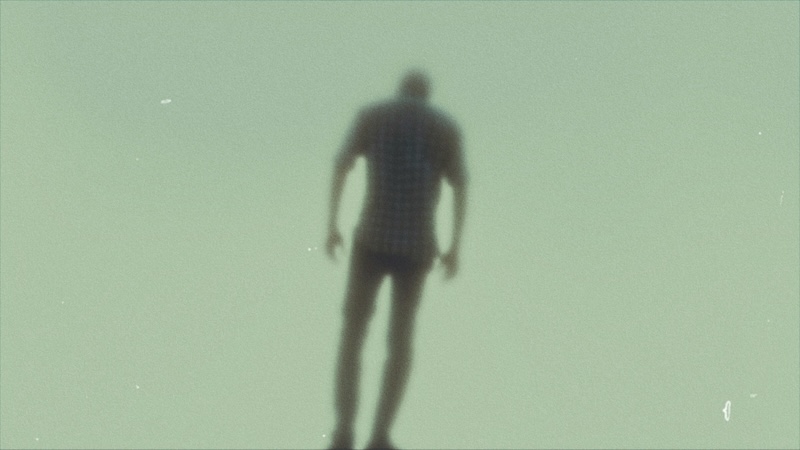
For thousands of years, Polynesian seafarers crossed the vast Pacific Ocean using astronomical navigation techniques handed down from their ancestors. The night sky was divided into 32 houses—the four cardinal points (north, south, east, and west) and seven secondary houses that repeated in each quadrant. One of these was called kore by the Māori peoples of New Zealand—‘the void where there are no clues.’
At Ātea a Rangi in Hawke’s Bay, New Zealand, a traditional star compass has been built on the foreshore at the confluence of the Tutaekuri and Ngaruroro Rivers. Each celestial house is represented by a wooden pole topped with a symbolic carving.
Except kore. It is represented by a plain pole: there are no clues.
The void
When we uncover trauma and cross the vast uncharted span of our unconscious, we periodically enter kore, the clueless void. In kore we are becalmed and blinded. There is no horizon. No breath of wind, no puff of cloud, no glitter of a distant star. It is blackout and whiteout, a place of sensory deprivation.
Nothing moves in the void. The stillness, the breathlessness, the silence is unsufferable. We associate this inertia with decay and death.
The temptation is to force ourselves to move. If we’re moving, we’re alive—yet, in the void, movement proves impossible.
The longer we are becalmed, the more panic sets in.
Panic is a byproduct of hemispheric dominance. Our left brain, home to our intellect, believes it is responsible for all analysis and problem-solving. When it has no clues it cannot analyse, cannot problem-solve. Instead, it panics.
Panic is a distress signal from a non-functioning intellect; an intellect attempting a task outside its remit: navigating the void—a place of being, not doing.
Navigating the void
In ‘Here be dragons’ – healing generational trauma is a hero’s journey I compare navigating the unconscious to the whitespaces on old maps and to philosopher Joseph Campbell’s template of a hero’s journey from which no one returns unchanged:
“The adventure of the hero normally follows the pattern of a separation from the world, a penetration to some source of power, and a life-enhancing return.” [1]
The source of power we penetrate is our own unconscious, in which—as Laura Knight-Jadczyk writes— “are found unfathomable depths of the rejected, the unacknowledged, the unrecognised, the unknown and undeveloped elements of our existence.” [2]
As we recognise, acknowledge, and develop these elements, we become more conscious, more empowered. Yet we also encounter the void.
Like Knight-Jadczyk, early psychoanalyst Wilhelm Reich uses an oceanic metaphor to describe the unconscious: “Your conscious action is only a drop on the surface of a sea of unconscious processes, of which you can know nothing—about which, indeed, you are afraid to know.” [3]
Progress
What the panicky intellect doesn’t realise is that the void often signals progress.
Voids occur when one process or life phase ends and the next not yet begun. There’s a period of transition, resetting the sails, a change of compass heading. These things take time.
In terms of driving a car, kore represents the gear-changing action when we depress the clutch to engage a higher gear. For a moment we’re freewheeling—yet when we engage the next gear our progress accelerates.
When we recognise kore as a phase-shift, we can relax. The trick is to make our over-eager intellect think it knows what’s going on. To do this we must feed it something it can understand and accept: the lack of clues is the clue.
I am in the void right now, a void between lives, between deaths and births. Kore has revealed itself at precisely the right moment. As I leave Ātea a Rangi and Hawke’s Bay, Cyclone Vaianu chases me south. Nature abhors a vacuum; the void dissipates. A new heading across the great ocean of life calls.
Photo by mano harshith on Unsplash
References
[1] Campbell, Joseph; The Hero with a Thousand Faces (1949)
[2] Knight-Jadczyk, Laura; Debugging the Universe (2001)
[3] Reich, Wilhelm; The Function of the Orgasm (1942)