
Kill or be killed – the basic patriarchal equation
- 1 May 2026
- Posted by: Michael H Hallett
- Category: Ancestral trauma , Patriarchy ,
In 2020, In a blog called The 3 laws of patriarchy, I suggested that the basic psychological laws governing patriarchal societies were these:
- The Law of Masculinity—the masculine rules the feminine
- The Law of Victimization—the stronger can victimize the weaker to the extent that they can get away with it
- The Law of Otherness—those who are ‘other’ can be victimized to the extent of their otherness
It has taken six years to reach—in the depths of my own ancestral unconscious—the primal law that underlies all these. At the root of patriarchal society lies a basic psychological equation, for men in particular: be willing to kill or be willing to be killed.
In Giorgio Bassani’s acclaimed novel The Heron, Edgardo Limentani, an Italian Jew who survived persecution during the Mussolini era, goes hunting in the marshes. But when he has a heron in his sights, he cannot kill it. Instead, he hands this task to his guide. Limentani knows he has failed patriarchy’s basic equation. He returns home and finally shoots himself.
Desertification
In Saharasia, geographer James DeMeo describes how long-term drought in the Sahara, Middle East and Central Asia led to desertification, famine and competition for resources. Peaceful Neolithic fertility cults gave way to violent nomadic warriors. After seizing the key water sources of the Middle East, they established the first patriarchies and eventually spread their toxic psychological and social model around the globe.
This event, which spanned several thousand years, is recorded in the Bible as ‘The Fall’—a folk memory of actual events, distorted by time, distance, and dissociation. Psychology lecturer Steve Taylor writes: “The main event in human history is a sudden, massive regression—a dramatic shift from harmony to chaos, from peace to war, from life-affirmation to gloom, or from sanity to madness” [1] that occurred around 6,000 years ago.
This “madness” was humanity adjusting to a new paradigm: insufficient food and water resources, resulting in ‘kill or be killed.’ Long-term drought drove centuries-long famines that shattered the communal mentality of the Neolithic:
“A passive indifference to the needs or pain of others manifested itself, and hunger, feeding of the self, became their all-consuming passion.
The very old and young were abandoned to die. Brothers stole food from sisters, and husbands left wives and babies to fend for themselves. While the maternal-infant bond endured the longest, eventually mothers abandoned their weakened infants and children.” [2]
Over time, human ingenuity solved its resource shortages—yet the paradigm remained.
Nowadays we’ve mostly outsourced our killing, to faceless paramilitaries in ‘security organisations’ staffed with ex-soldiers, slightly sanitised versions of the infamous Wagner Group. Like meatworkers, they fill a role all men were once expected to perform.
Violence beneath the veneer
Historically—and not even that long ago—men were unflinchingly expected to fight and kill. To die for your country was noble. To return wounded, traumatised, or released from a POW camp was a source of embarrassment and shame.
This expectation was not just behavioural. It became psychological, then biological, then ancestral. It embedded itself as a requirement for belonging. Your usefulness to your tribe was determined by your ability to end life (for men) or create life (for women).
To be a man in a patriarchal structure was not simply to exist—it meant participating in violence or accepting subjugation. There is no neutral position in such a system. You are either agent or object.
This is the equation.
Crucially, it does not disappear when the wars end, when the ancient tribes have divided the world map into modern countries, the trade routes are open and the veneer of ‘goodwill to all men’ prevails. It just internalises. Psychoanalyst Wilhelm Reich writes:
“The character structure of modern man, who reproduces a six-thousand-year-old patriarchal authoritarian culture, is typified by… armouring against his inner nature and against the social misery which surrounds him. This… armouring is the basis of isolation… fear of responsibility, mystic longing, sexual misery, and neurotically impotent rebelliousness.” [3]
The purpose of this structure is to enable the killing of others and the ability to function when our own loved ones are killed. It’s achieved through numbness, isolation, and dissociation.
Victim or victimizer
The drive to ‘kill or be killed’ creates a victim/victimiser dynamic at the core of all human interactions. This dynamic is not learned in adulthood. It’s inherited, absorbed, and enacted unconsciously in every sphere of our lives: financial, political, personal, sexual.
A boy does not grow up in a vacuum. He inherits a nervous system shaped by generations of men who had to harden themselves against empathy to survive. The cost of that hardening is profound: emotional numbness, sexual dysfunction, rage without reason or direction.
‘Kill or be killed’ becomes:
- Dominate—or be dominated
- Suppress—or be overwhelmed
- Possess—or be possessed
- Shame—or be shamed
And, more crudely:
- Fuck—or be fucked
These are intended not just in the superficial meaning of each word but in the deeper sense of identity, agency, and personal sovereignty.
“A shambles”
To prevent ourselves feeling the overwhelming pain of this system, we dissociate ourselves like Lego figures: head, torso, legs. Psychiatrist R. D. Laing writes:
“When our personal worlds are rediscovered… we discover first a shambles… genitals dissociated from heart; heart severed from head; heads dissociated from genitals.” [4]
As everyone has the same pattern, it’s been dissociated into invisibility. The normalised is thought—not that anyone even thinks about it—to be normal. Yet this “shambles” is constantly acted out in thought, feeling, and behaviour.
When a man feels sudden, disproportionate rage; when he oscillates between domination and collapse; when intimacy triggers fear rather than connection, he’s not malfunctioning. He is not suffering from ‘mental health’ issues.
He is enacting a script. A 6,000-year-old script written in a world where survival required the capacity to kill—and the willingness to die. It’s an ancient operating system still percolating beneath the surface of modern, supposedly civilised life.
This stops with me
If this sounds bleak, it is—but only in the sense of ‘the darkest hour is before the dawn.’ We cannot truly solve a problem unless and until we fully understand its scope.
Once seen, the pattern can be interrupted. Not bypassed. Not moralised. Not medicated into silence. Seen. Acknowledged. Witnessed. Released.
Because the moment you see the equation—really see it—you are no longer bound to solve it in the same way. You no longer need to dominate to survive, to prostitute yourself to belong. You no longer need to unconsciously accept the violence of your ancestors as your identity.
Patriarchy may have been built on the binary of kill or be killed. But awareness introduces a third option: neither. And that is where something genuinely new begins. But this requires responsibility—the responsibility to say, “this stops with me.”
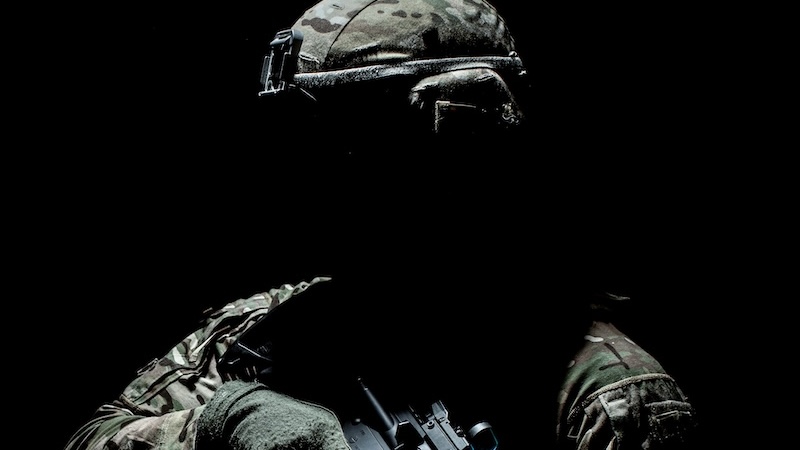
Photo by Alexander Jawfox on Unsplash
References
[1] Taylor, Steve; The Fall (2005)
[2] DeMeo, James; Saharasia (1998)
[3] Reich, Wilhelm; The Function of the Orgasm (1942)
[4] Laing, R. D.; The Politics of Experience (1967)