
The silence of the lambs: silence as survival strategy
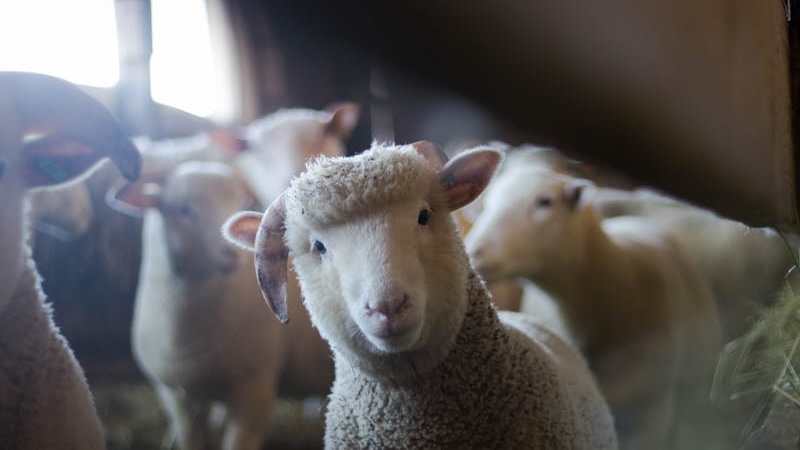
When families encounter hardship, something curious often happens. Just like lambs before slaughter, they fall silent. Not always immediately. At first there may be noise—confusion, blame, or frantic attempts to fix things. But over time a deeper pattern emerges. Silence.
The event that shook the family—affair, abandonment, addiction and, always, shame—slowly becomes something that’s not spoken about. It sinks below the surface.
What we call a ‘family secret’ is rarely just a secret. It’s more like a sealed chamber in the unconscious life of the family. Everyone knows it’s there, even if nobody has ever opened the door. Children grow up sensing its shadow long before they understand it.
They feel it in the atmosphere:
- Tension when certain subjects arise
- A sudden change of vocal intonation
- Silence when there should be explanation
As children, we learn very quickly: there are places we do not go.
“Sometimes the most dangerous thing for kids is the silence that allows them to construct their own stories.”
— Brené Brown
This is how silence becomes generational.
The original hardship may have occurred decades ago. Perhaps before the child was even born. Yet the emotional consequences ripple down the family line because the underlying trauma was never transmuted.
Instead, it was buried.
When something’s buried in our unconscious, three things always accompany it: fear, shame, and the inability or refusal to take responsibility. We’re afraid of what we might discover if we opened the chamber, if we looked the silent lamb directly in the eye. We feel ashamed that such a thing happened in our family. And so, quite naturally, we avoid it.
Silence as survival strategy
The problem is that the unconscious does not respect silence.
What we refuse to speak, we must act out. Sigmund Freud called these parapraxes, repressed fragments of consciousness not entirely robbed of the ability to communicate.
They appear as patterns of behaviour that seem unrelated to the original hardship: anxiety, emotional withdrawal, addiction, people-pleasing, anger (repressed or explosive), the vague feeling something’s “not quite right.” These patterns may seem isolated yet they’re often part of a constellation of symptoms of stunted development and inherited trauma.
Children, in particular, are highly sensitive to the emotional minefield of their homes. They instinctively adapt to survive it.
If the family’s rule is silence, the child learns silence.
If the family’s rule is avoidance, the child learns avoidance.
When neither fight or flight are available, we turn to freeze and fawn. Or, in this case, sheep. And so, the pattern continues. Another generation of lambs falls silent to avoid the emotional slaughter of speaking out.
Most families don’t choose silence consciously. They’re simply trying to survive something that felt unbearable at the time. In many cases the original participants lacked the emotional language or psychological capacity to process what happened.
Imprisonment
The silence was, in its own way, protective. But protection that lasts too long becomes imprisonment.
Over generations the unspoken story distorts the family narrative. Descendants inherit emotional fragments without context. They experience feelings—shame, abandonment, anger, grief—without knowing where they came from.
It can seem as if these emotions have appeared from nowhere. We’re the only ones feeling them. Everyone else is fine. Yeah, right. They’ve been percolating beneath the surface for decades. The bones of lambs long frightened into silence and passed away.
Families often imagine that if they keep silent long enough the past will fade away. Yet the opposite is usually true. What’s hidden in the unconscious tends to repeat itself in new forms until someone is willing to bring it into the light.
This is why genuine healing often begins with curiosity. Someone asks the obvious question. Why are the lambs quiet tonight? Why does Aunt Joan fall silent—eyes glassy, voice hollow, skin greasy and pale—at the mention of her estranged brother?<
Someone begins to trace the story backward. The patterns, the behaviours, the emotional currents that run through the family line. “You know my method,” Sherlock Holmes said. “It is founded upon the observance of trifles.”
Like a detective piecing together clues, we come to recognise that the present is alive with echoes of the unresolved past. And when that happens—when the silence finally breaks—something remarkable occurs.
The shame that kept the family quiet begins to lose power.
The ghosts that once governed behaviour from the shadows can be seen, understood, and integrated. The family finds its voice. What was once a sealed chamber becomes part of a larger narrative—a narrative no one is afraid to speak into.
And with that shift comes a profound realisation. The hardship that once silenced the family no longer has to define it. Because the moment we’re willing to look directly at the past, the cycle of silence can finally begin to end.
Next steps
For further resources on generational trauma, both free and paid, please click on this image.
Photo by Trinity Kubassek at Pexels