
Impostor syndrome – a child asked to do an adult’s job
- 4 December 2025
- Posted by: Michael H Hallett
- Category: Cornerstones , Generational trauma ,
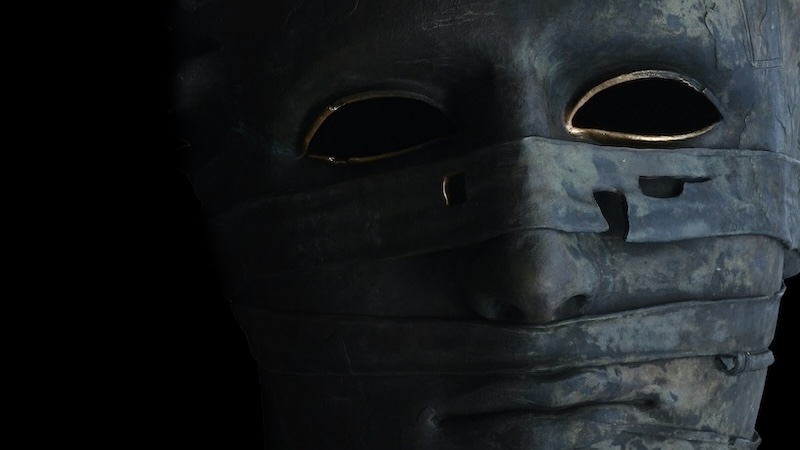
While not (yet) clinically recognised, impostor syndrome is a psychological pattern whose effects are increasingly recognised and whose roots predate our own lives. Impostor syndrome is the experience of a child asked to do an adult’s job.
What is impostor syndrome?
From Wikipedia:
Impostor syndrome, also known as impostor phenomenon or impostorism, is a psychological experience in which a person suffers from feelings of intellectual and/or professional fraudulence. One source defines it as “the subjective experience of perceived self-doubt in one’s abilities and accomplishments compared with others, despite evidence to suggest the contrary”.
Impostor syndrome is not a recognized psychiatric disorder and is not featured in the American Psychiatric Association’s Diagnostic and Statistical Manual (DSM-5) nor is it listed as a diagnosis in the International Classification of Diseases, Tenth Revision (ICD-10). However, outside the academic literature, impostor syndrome has become widely discussed, especially in the context of achievement in the workplace.
A careful reading between even these brief lines reveals the underlying pattern of impostor syndrome. The emphasis on the workplace relates to responsibility, expectation, and delivery. The impostor feels they are inadequately prepared for a task they’re required to perform.
Impostor syndrome is the experience of a child asked to do an adult’s job, which provokes a sense of inadequacy, overwhelm and collapse. This triggers the fight-or-flight mechanism which impels the impostor to exit the situation. This can happen even when the sufferer is highly capable and meets their responsibilities, expectations, and deliverables.
While it is most closely associated with work, it can be triggered in any situation where responsibility is thrust on someone ill-equipped to meet it, such as household finances, parenting, or caregiving—in other words, adulthood.
Whenever this happens the overwhelming urge is to ‘cut and run.’
This pattern destroys careers, jobs, families, and lives.
Arrested development
When we recognise impostor syndrome as a child asked to do an adult’s job, this clearly points to the partial or total failure of key childhood developmental tasks. This failure is known as arrested development.
Arrested development signals improper nurturing and role-modelling. It stems from traumatic events in our parents’ or grandparents’ lives, usually during adolescence or early adulthood. Like all inherited trauma issues, the more sensitive we are, the more we’re affected. Siblings can be affected quite differently, making attribution difficult.
Arrested development underpins what is commonly called the inner child or ‘inner child work.’ This is the part of us that was unable to grow up. In her best-selling memoir of family trauma, The Architect of Desire, Suzannah Lessard writes with simple eloquence: “I had failed to develop an adult context for myself.”
As human beings, we have three key psychological ‘development arcs,’ or circuits, leading from infancy to maturity:
- Mother-child arc from conception to about age 6½: connection, communication, community. It paves the way for healthy nurturing, self-worth and belonging.
- Father-child arc from about ages 6½ to 13: boundaries, negotiating with others, healthy work. It paves the way for the responsible use of power.
- Puberty arc from about ages 13 to 19½: integrating the first and second circuits to become a responsible, productive, community-centric, sexually active adult.
I use the quite precise span of 6½ years for each circuit. It’s no coincidence that from thirteen to nineteen is a specific life stage. It’s important to note that each circuit can only develop healthily to the extent that the previous circuit(s) developed healthily. While impostor syndrome relates to work (father-child arc), it can be worsened by issues with the preceding mother-child development arc (lack of nurturing).
As impostor syndrome relates to work—in the wider sense of the word—it’s part of the father wound constellation. It is to our father line we must look for the roots of this condition.
My father’s wartime service
As I describe in The Beaufighter – assembling genealogy clues, I recently put together a picture of my father’s wartime service that he never disclosed. At age 18, he worked as a flight test engineer on the world’s first radar-equipped aircraft, the Bristol Beaufighter night fighter, which put an end to German night bomber raids against Britain in 1941:
There is great pride at recognising my father’s war service, not just his contribution to the war effort but also the technical innovation. Yet there is a sense of loss at never knowing this until long after he passed away, as well as sorrow that he lost his best friend.
Beyond this there’s a bigger picture of the emotional impact of the situation. The Official Secrets Act, the ‘top secret’ classification, the pressure of bringing this aircraft into service when the whole country was visibly suffering, the loss of his best friend—all heaped on the shoulders of an 18-year-old from a fragmented family.
Since writing that blog, the pain of my father’s impostor syndrome has surfaced. I have no doubt he felt crushed by the weight of responsibility for the situation he was thrown into in 1940-41—a child asked to do an adult’s job.
After Germany lost the Battle of Britain and turned to night attacks, the handful of scientists, engineers, and flight crew developing the radar-equipped Beaufighter in a race against time were literally carrying the nations’ hopes on their shoulders.
Early episodes of the acclaimed British detective drama Foyle’s War chart this tense period, through the critical summer of 1940 into the winter ‘blitz’ of 1940-41. In both cases, the use of newly developed radar technology was the decisive factor.
There is much praise for ‘the Few’—the fighter pilots who won the Battle of Britain—yet those who got the world’s first radar-equipped night fighter to work were far fewer. With a stable upbringing my father might’ve been able to survive this ‘pressure cooker’ and build a successful life; with his fragmented upbringing he never stood a chance.
To continue reading, please purchase the Impostor Syndrome Toolkit.