Your family history is the map of where you lost yourself
- 21 July 2026
- Posted by: Michael H Hallett
- Category: Genealogy ,
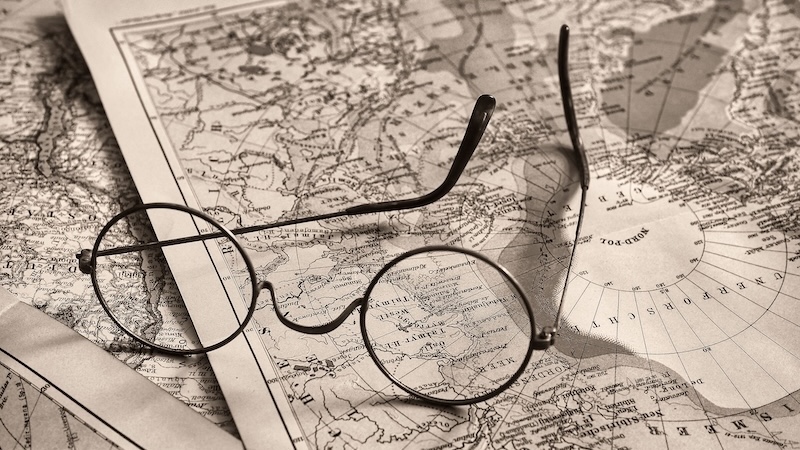
Photo by Beate Vogl on Pexels
Who am I? The question echoes across social media platforms in various forms with ever-growing frequency. I thought I knew who I was. I’m no longer sure. This question implies another question: How do I get to a place where I have a clear sense of identity? A journey needs a map. We all unknowingly carry that map inside us—our family history.
We are streams of genetic material cascading through space and time, one generation to another. A chunk of that stream is unique to you. Yet much of it isn’t. What you call you is, in large part, inherited—shaped by forces that existed long before your birth. Emotions that were never processed. Patterns that went unrecognised. Shame that dwelled in silence.
All these places where our past is not articulated are experienced internally as dullness, blurriness, confusion—lack of identity. We don’t know our own foundations. But this isn’t about an intellectual checklist of who, what, where, and when. It’s about emotional embodiment of the last and most important of the ‘Five W’s’—the why.
When we know where we come from—the good, the bad, and the ugly of the last few generations of our lineage—and fully own it without shame, our identity becomes clear. Reclaiming lost identity is not an act of invention or re-invention, but of archaeological excavation.
And for that we need a map.
Family history as a map
We carry that map inside us—unwanted or even unrecognised—in our family patterns. They were formed in moments when someone in your lineage was overwhelmed—by loss, grief, betrayal, rejection, or social exclusion. And, crucially, they were never resolved.
In the covering up of this overwhelm—of the social withdrawal, the lapse into silence and shame—they smothered part of their truth: their identity. That smothered truth is inside you, longing to breathe. And it provides the coordinates for its own resolution.
Your family history is not just a set of facts. It’s a map of unresolved pain—points where emotional impacts exceeded the capacity to process them in real time. An affair that led to exile, like my mother’s mother. A grandparent who disappeared, like my father’s father. A child who passed without recognition, like my uncle who died after 25 hours.
Each moment creates a rupture. Each rupture leaves a residue—a place where the story of how you became you is blurred and blotted out. And that residue becomes part of you. It’s like the blank spaces on old maps: there’s something here, but we don’t know what.
Reading the map
Simply looking at the facts of our family history will not tell us what. The real work lies in identifying emotional fault lines:
- What relationships broke down?
- When was someone excluded, shamed, or abandoned?
- Where did convenient silence replace socially inconvenient truth?
These are coordinates. When we see these events not as isolated incidents but as unresolved emotional processes, the glossy façade of the past cracks. You start to penetrate the surface.
Census records are assumed to represent a snapshot of truth. My great-grandfather’s census records consistently demonstrate half-truths, evasions, and—probably—outright lies. No one chooses to do this other than for protection. What had to be hidden?
In trauma work, there’s an axiom that you don’t ask Why did you do this? Instead, you ask What happened to you that made you do this?
Yet even this does not reveal the map. Often, we can’t answer the question—because the drivers are mired in the shame of our family’s unspoken past. So, stop asking Who am I? Start asking Where did this pattern of loss begin?
Reclaiming identity
Identity is not reclaimed by thinking. Your intellect can analyse a family pattern, but it can’t dissolve it. Emotional issues must be resolved at their source—through feeling, not thinking. We must do the processing our ancestors couldn’t. This means:
- Turning towards the shame they—and you—avoided
- Allowing the underlying emotions to surface, without judgment
- Consciously meeting the original wound—directly, not conceptually
When these conditions are met, the pattern releases. The anxiety, the compulsions. The emotional reactions you couldn’t control—they were never yours. They were inherited patterns, mechanically triggered, waiting to be recognised and resolved. Waiting for you to read the map lying dormant within you and discover the gift hidden in every trauma.
Because your family history is so much more than a story. It’s a structured guide to the places where shame took root—and where your identity was quietly blurred to conceal them.
Follow that map far enough, you reclaim yourself—and find a clear identity.